

The History and Evolution of Hunt Tags: Staying Legal in a Modern World
At dawn, a deer is down, your hands are cold, and the moment is still settling in. Twenty years ago, you would pull a paper tag from your pocket, notch the date, and tie it to the antler.
It was simple. But now, the process has changed. It often involves an e-tag system on a phone, trying to submit a harvest while dealing with a poor signal or a low battery, all while keeping a physical backup ready in a pack.
As a result, many hunters feel caught between paper tags and e-tag systems that don’t always work smoothly together. Your buddy in the next state still uses paper, while your cousin's state requires a digital confirmation and a physical backup.
The evolution of hunt tags isn't just about technology replacing paper. It’s a story of how wildlife management changed to save species from the brink of extinction.
Understanding this shift helps you prepare for every season and decide which gear you need when you’re miles from cell service and an animal is on the ground.
A Free-For-All: Why Hunt Tags Exist
Before looking at how tagging evolved, it helps to step back and see what hunting looked like before rules were in place.
There were a few early hunting laws in New England in the 1700s, but for the most part, hunting was largely unregulated until the mid- to late 1800s.
As railroads expanded and people pushed west, hunting pressure increased rapidly. Species like the American bison were hit especially hard. It’s surprising to many people that bison once roamed as far east as Pennsylvania and New York, and as far south as Louisiana.
Their rapid decline became one of the clearest examples of what happens when there are no limits and no system in place.
Eventually, people realized that this couldn’t continue. Hunting needed structure to protect wildlife for the future.
For some species, like the eastern elk, that realization came too late, and they disappeared by the late 1800s. In response, states started taking action by appointing game wardens and setting official hunting seasons to help protect what remained.
The Wisconsin Example
Wisconsin is a perfect example of how game laws and tags evolved.
-
1851: Established the first closed season dates for deer.
-
1887: Appointed the first game wardens.
-
1897: Established the first big game licenses and bag limits.
Back then, a resident license cost just $1, while nonresidents paid a steep $30. These early rules were the birth of the evolution of hunt tags as we know them today.
Why Tags and Seasons are So Important
Deer numbers across the East and Midwest were getting dangerously low around the same time states like Wisconsin began implementing rules.
People began to realize something had to change. So states stepped in with new rules, adding bag limits, closing seasons for a few years to let herds recover, and setting clear guidelines on how animals could be taken.
Today, hunting licenses and tags play a significant role in maintaining healthy wildlife populations. It’s easy to overlook that.
For example, spring turkey season feels like a given now, but those birds were once on the brink of disappearing.
Without these systems, hunting would look very different. There would be fewer opportunities, and in some places, no seasons at all. Tags may seem like simple paperwork, but they’re a big reason we still get to hunt today.
Paper Tags and the Limits of Simplicity
For most of the 20th century, paper tags were the standard. While simple, the system had flaws:
-
Durability: Paper gets soaked in blood or rain, making it unreadable.
-
Fraud: It was easier to alter a paper tag if a warden wasn't nearby.
-
Slow Data: Agencies had to wait months for hunters to mail in report cards.
Wildlife managers need fast data to decide how many permits to issue for the next year. With paper, that information often arrived too late to help.
The Shift Toward Electronic Tagging
The move toward e-tagging started with telecheck systems in the 1990s: phone lines where you called in your harvest. Then came the smartphone. By the 2010s, states began building apps and web portals.
Today, the landscape is a patchwork. Some states are fully digital and require only a confirmation number. Others use a hybrid approach where you carry a physical tag but must also report it through an app.
Digital systems enable agencies to see harvest trends in near real time. If a specific unit is being overharvested, they can adjust rules before the season even ends.
However, e-tagging has its own hurdles, such as dead batteries and no cell service in the backcountry.
The Hybrid Reality: How to Adapt
Most of us don't live in a 100% digital world. You likely carry a smartphone, but you also carry a paper backup in case technology fails. This hybrid reality will likely be here for a long time.
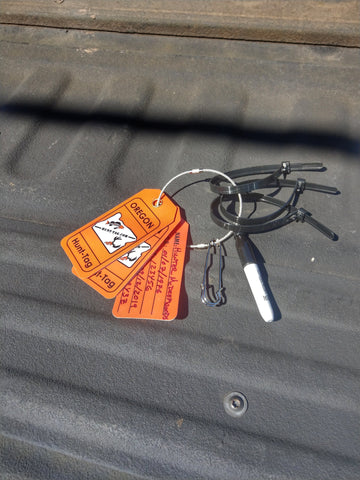
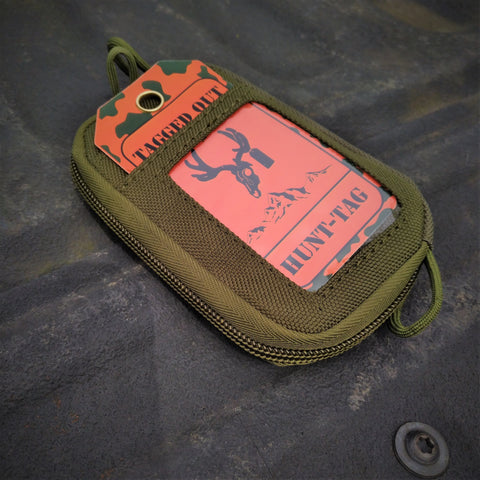
A dedicated Hunt-Tag Wallet or Paper Tag Kit isn't about ignoring technology. It’s about keeping your physical backups and digital tools in one spot. When your hands are freezing, you shouldn't have to dig through your pack for a crumpled piece of paper.
Pro-Tips for the Modern Hunter:
-
Verify Your State Yearly: Don't assume the rules from last year still apply.
-
Screenshots are Vital: If your state uses e-tagging, screenshot your license so you have proof without a cell signal.
-
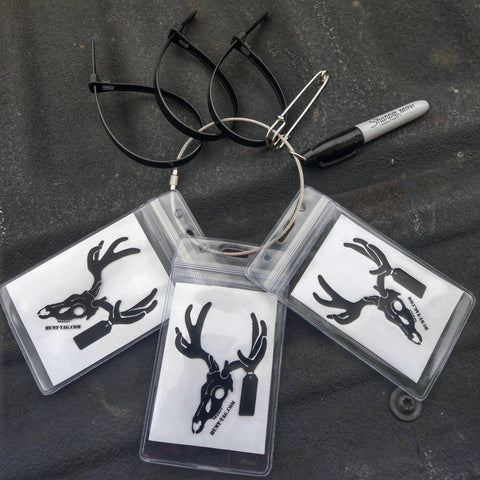
Protect the Paper: If you still use physical tags, use a Waterproof Tag Bag to keep them legal and readable.
Frequently Asked Questions
Why did bison disappear from the Eastern US?
Before hunting laws existed, bison were hunted without limits for meat and hides as settlers moved west. By the mid-1800s, they had been pushed out of their eastern range entirely.
What was the first state to require a hunting license?
While many states had small laws, New York and New Jersey were among the first to require broader hunting licenses in the mid-to-late 1800s to help manage dwindling game.
What happens if I forget to report my e-tag harvest?
In many states, failing to report your harvest through the app or website is a violation, even if you physically tagged the animal. You could face fines or be barred from buying a license next year.
Can I still use a paper tag if the app is down?
Most states with e-tagging have a paper backup rule for when technology fails. Always carry a pen and a backup document just in case the system crashes in the field.
Make Tagging the Easy Part of Your Hunt with Hunt-Tag
The evolution of hunt tags is a success story. It’s the reason we have healthy herds of deer, elk, and turkey today. While the shift from paper to digital can be frustrating, it is all part of keeping the sport alive for the next generation.
At Hunt-Tag, we build tools that handle both the old-school paper and the new-school digital. We want to make sure the paperwork is the least of your worries.
If you’re looking to upgrade your field organization, check out our kits. We’re happy to help you find the right setup so you can focus on the hunt, not the regulations.