

How to Store Hunting Tags Without Losing or Ruining Them
Before sunrise, the truck door shuts softly, and boots hit the gravel. The pack feels right, the air is cold, and everything seems lined up for a solid day in the field.
Then comes the familiar jolt of worry; the hunting tags are bent, soaked, or missing altogether. That stress can follow a hunter all day, turning a moment of excitement into one of doubt.
Knowing how to store hunting tags is about avoiding common mistakes that happen before, during, and after a hunt. That is why Hunt-Tag focuses so much on real-world tag management, not just rules on a screen.
Whether you use paper tags, e-tags, or both, the goal is the same: keep your info protected, readable, and easy to find when the moment comes.
This guide breaks down practical ways to store hunting tags so they stay ready in your pack, in your pocket, and back at home for the next season.
Why Tag Storage Matters More Than You Think
Hunting tags serve a specific legal function. They prove you have the right to harvest an animal, and once filled out and attached, they document that harvest for wildlife management purposes.
State agencies use tag data to track harvest numbers, which directly influences future quotas, season lengths, and conservation decisions.
That's the regulatory side. On the practical side, your tag is the single piece of paper that separates a legal harvest from a potential violation. If a warden checks you in the field and your tag is missing, destroyed, or unreadable, you're in a difficult position regardless of your intentions.
The shift toward e-tagging has helped in some ways; digital confirmations reduce the risk of losing a physical document. But many states still require paper tags, or paper backups to electronic systems.
And even in states with full e-tagging, you may still need to print a carcass tag and attach it to the animal. That printed tag faces all the same hazards as a traditional one.
How to Store Hunting Tags Before Your Hunt
The time between receiving your tag and leaving for the field is when most damage begins. Here’s what you can do:
Keep Tags Flat and Protected
Paper tags crease easily. A hard fold weakens the fibers, and that crease becomes a tear line under stress. Store your tags flat, in a rigid sleeve or folder, away from heat and moisture.
If you're using a printed carcass tag from an e-tagging system, print it on cardstock if your state allows, or laminate everything except the area where you'll need to write or punch.
Make Copies and Store Them Separately
Before you leave, photograph your tag with your phone. Get a clear image of the tag number, your personal information, and any barcodes or QR codes.
This won't legally substitute for the physical tag, but if something goes wrong, you'll have documentation that helps explain the situation to a warden.
Some hunters make a photocopy and leave it at home or with a hunting partner. If your original is lost or destroyed, having a copy may support your case.
Check the Tag for Errors Before You Leave
Verify that all printed information is correct: your name, license number, tag number, species, and unit. If there's a mistake, contact your state agency before you hunt.
How to Store Hunting Tags During the Hunt
This is where most failures happen. Rain, sweat, river crossings, and blood make the field unforgiving. Your tag storage solution needs to account for all of it.
Use a Dedicated Waterproof Container
Your tag should live in one place, and that place should be waterproof. A resealable plastic bag works in a pinch, but it punctures, seals fail, and offers no structural protection. A better option is a small, rigid, waterproof case or pouch designed for the purpose.
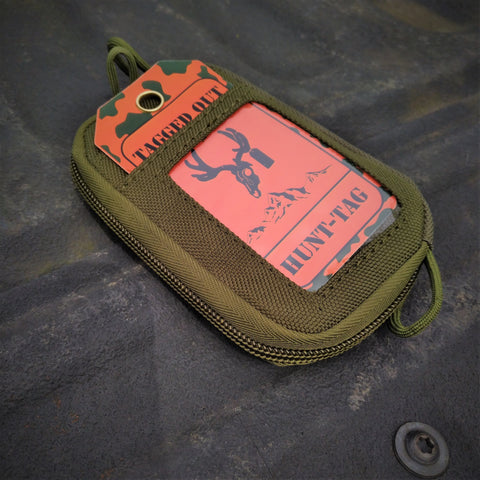
Hunt-Tag's Tech Pouch is built for exactly this situation. It keeps tags dry and accessible without adding bulk.
If you prefer something slimmer, the Hunt-Tag Wallet holds tags in a compact format that fits easily in a chest pocket or pack lid.
Whatever you use, it should meet three criteria: waterproof, accessible without unpacking your entire bag, and durable enough to survive being sat on, dropped, or crushed against a tree.
Know Where Your Tag Is at All Times
Decide where your tag lives before you leave camp, and don't move it. Many hunters keep tags in a chest pocket or the top lid of their pack so they’re easily accessible without removing layers or digging through gear.
The worst place to store a tag is loose in a pants pocket. Pockets collect moisture, tags work their way out during movement, and the constant friction quickly degrades paper.
If your pants have a zippered thigh pocket with some structure, that's acceptable. A regular hand pocket is not.
Protect Tags from Blood and Fluids
Before you start working on the animal, move your tag to a secure, clean location away from the carcass.
Once you've filled out the tag and attached it, some hunters add a layer of protection by placing the tag inside a small zip-lock bag before securing it to the animal.
This helps preserve legibility during transport, especially in wet conditions or over long pack-outs.
How to Store Hunting Tags After the Hunt
Your tag's job isn't finished when you get home. Depending on your state, you may need to retain the tag for inspection, reporting, or record-keeping.
And even if there's no legal requirement, keeping your tags organized protects you in case of future questions.
Retain Tags for the Required Period
Many states require hunters to keep their tags or proof of harvest for a specific period after the season ends. This varies by species and state. Some require you to retain records for 30 days; others for a full year or longer. Check your state's regulations and follow them.
If you're unsure, err on the side of keeping everything. Store filled tags in a dry, secure location at home, whether that’s a file folder, document box, or even a dedicated hunting records binder. Label them by year, species, and unit for easy reference.
A System Approach to Tag Management
The best hunters treat tag management as a system, not a single decision. They have a place for tags at home, a dedicated container for the field, and a routine for handling tags after harvest.
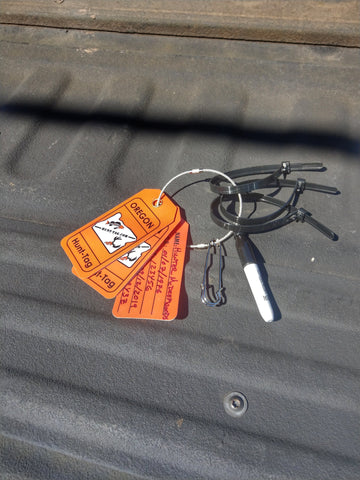
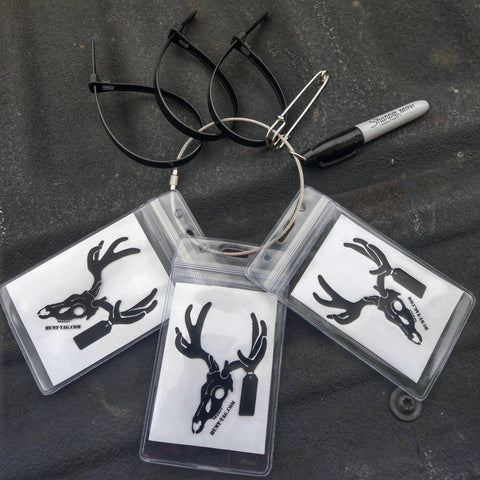
The Hunt-Tag System Paper Tag Kit is one example of this approach. It gives you the tag, protective materials, and attachment tools in one package, designed to work together.
Whether you use a kit like this or assemble your own, the principle is the same: think about the entire lifecycle of your tag, and build a system that covers each stage.
FAQs
What should I do if my hunting tag gets wet during a hunt?
Move it to a dry location and let it air dry completely before writing on it. If the ink has already bled or the paper is damaged, contact your state wildlife agency as soon as possible to report the issue.
Can I laminate my hunting tag to protect it?
You can laminate portions of your tag, but be careful. Many states require you to punch, notch, or write on specific fields when you harvest an animal. If those areas are covered by lamination, you won't be able to comply with the law.
Where is the best place to carry my tag while hunting?
The best location is somewhere waterproof, accessible, and consistently on your person. A chest pocket with a zipper, the top lid of your pack, or a dedicated pouch attached to your belt or harness all work well.
Store Your Tags the Right Way with Hunt-Tag
At Hunt-Tag, the entire focus is on helping hunters like you handle tag requirements with confidence.
Rules and paperwork aren’t the exciting part of hunting, but getting them right keeps the attention in the field, in the moment, and on the experience.
For hunters looking to stay prepared, we offer hunting tags, protective storage options, and other field-ready essentials designed for real conditions.
Shop now and get set up for the season ahead.