

How Legible Hunt Tags Protect Your Hunt and Your Record
You filled out the tag correctly. You attached it before transporting your animal. You followed every step of the regulations outlined.
And yet, standing there with a game warden examining your harvest, you realize the ink on your tag has smeared beyond recognition. The date is gone. The location is a blur. Suddenly, following the rules isn't enough because the proof of your compliance has vanished.
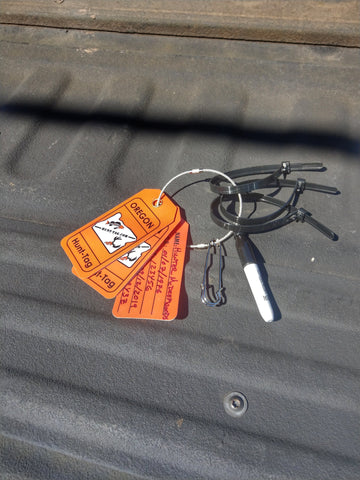
That is exactly why Hunt-Tag focuses on systems that help keep your tag details protected in real field conditions.
This guide breaks down why legible hunt tags matter, what causes tags to fail, and how better habits and tools help keep your tags readable when it counts.
What "Legible" Means Under Hunting Regulations
In practical terms, legibility means a game warden or check station attendant can read every required field on your tag without assistance, interpretation, or guesswork.
If they have to squint, ask you what something says, or take your word for it, your tag has failed the standard.
Typical required fields include:
-
Date of harvest (month, day, year)
-
Location or unit where the animal was taken
-
Species and sex of the animal
-
Hunter's name and license number
-
Signature (in states that require it)
-
Time of kill (in some jurisdictions)
How Legible Hunt Tags Become Unreadable and Why It Happens Fast
Here's what catches most hunters off guard: a tag that looks fine when you fill it out can become unreadable within a few hours under normal field conditions.
The culprits are predictable but persistent.
Blood, Water, and Moisture
Blood is the most common threat to tag legibility, particularly paper tags. When you tag an animal immediately after harvest as required, the environment around you is rarely clean or dry.
Blood contact can smear ink instantly, and water (rain, snow, creek crossings during packouts) compounds the problem. Even humidity can cause certain inks to run or fade.
Abrasion and Physical Wear
A tag attached to an animal during a packout or drag is subject to constant friction, whether that’s against brush, packs, or the inside of a vehicle.
Over the course of miles, this abrasion can wear away ink and even degrade the tag material itself.
Temperature Extremes
Cold weather can cause certain inks to fail or write inconsistently. Heat can make materials brittle or cause adhesives to fail if you're using a tag pouch or holder. Neither extreme is forgiving.
The Real Consequences of an Unreadable Tag
Let's be direct about what's at stake.
An illegible tag doesn't automatically mean you'll be cited. Game wardens have discretion, and most are reasonable. If everything else checks out, your license is valid, your story is consistent, and there are no other red flags, then you may receive a warning or be asked to fill out a new tag under supervision.
But you're now relying on someone else's judgment instead of clear documentation. That's not a position any hunter wants to be in.
In less favorable circumstances, an unreadable tag can lead to:
-
Citations for improper tagging can carry fines ranging from modest to severe, depending on the state and the species involved.
-
Seizure of the animal, particularly if officers can't confirm the harvest was legal.
-
License points or suspensions in states that use a point system for violations.
-
Complications with interstate transport, since federal regulations require proper documentation of legally harvested game.
E-Tagging Doesn't Eliminate the Problem
The shift toward electronic tagging (e-tagging) in many states has simplified some aspects of compliance.
You can often complete your tag through a smartphone app, receive a confirmation number, and, in some jurisdictions, avoid carrying a physical tag altogether for certain steps.
But e-tagging introduces its own legibility challenges.
Most e-tagging systems still require a physical component at some point: a printed confirmation, a handwritten carcass tag, or a paper record that accompanies the meat to a processor.
If your state requires you to write the confirmation number on a tag and attach it to the animal, that handwritten element is still vulnerable to everything discussed above.
Additionally, not all states have fully transitioned to e-tagging, and regulations vary widely. Some states use e-tagging only for certain species. Others require both electronic confirmation and a physical tag.
For hunters navigating these hybrid systems, Hunt-Tag's e-tag kits feature durable, weather-resistant tags that meet state requirements and withstand field conditions.
What Works in the Field
After years of hearing from hunters about what fails and what holds up, a few principles emerge consistently.
Use the Right Writing Instrument
Permanent markers with waterproof ink outperform ballpoint pens in almost every scenario.
Fine-tip markers allow for legible handwriting in small tag fields, and the ink bonds more effectively with most tag materials.
Avoid gel pens and standard ballpoints for any tag that will be exposed to moisture.
Protect the Tag Immediately
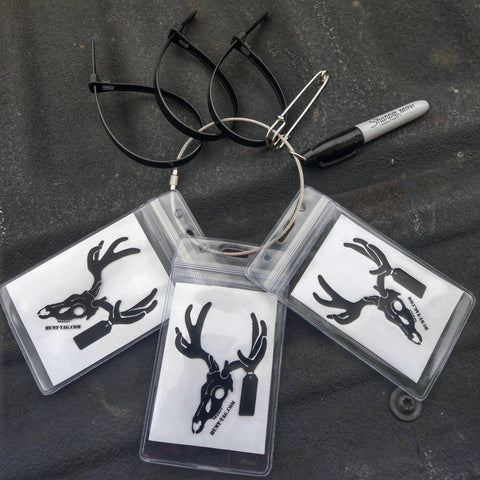
Filling out the tag is only half the job. Protecting it with a waterproof pouch, a laminating sleeve, or a zip-seal bag should be done immediately after completion.
Fill Out Tags Before You Need Them
Fill in static information (your name, license number, signature) before you're in the field. This lets you complete those fields in controlled conditions, leaving only harvest-specific details (date, location, time) to fill in after the kill.
Carry Backup Materials
A second pen, extra tag blanks (if your state allows), and additional protective sleeves weigh almost nothing but can save a hunt.
When your primary pen fails in the cold or your tag gets destroyed during a difficult packout, having backups is practical.
Frequently Asked Questions About Legible Hunt Tags
What happens if my tag becomes unreadable after I've already filled it out?
It depends on the circumstances and the officer involved. In many cases, you may be asked to fill out a replacement tag on the spot if you can provide license documentation and a credible account of the harvest.
However, some states treat an illegible tag the same as an untagged animal for enforcement purposes. The safest approach is to prevent the problem by using durable materials and protective covers from the start.
Does my tag need to stay attached to the animal until it reaches the processor?
Requirements vary by state, but generally, yes. Most states require the tag to remain attached to the carcass, hide, or a specific quarter during transport and until processing begins.
Some states require the tag to accompany the meat through processing. Check your state's regulations carefully; assuming you can remove the tag early is a common mistake.
If I use e-tagging, do I still need to carry a physical tag?
In most states, yes, at least partially. E-tagging typically generates a confirmation number that must be written on a carcass tag, printed on a confirmation document, or otherwise physically documented during transport.
Always verify the specific requirements for your state and species before relying solely on electronic confirmation.
Protect Legible Hunt Tags with Hunt Tag Gear
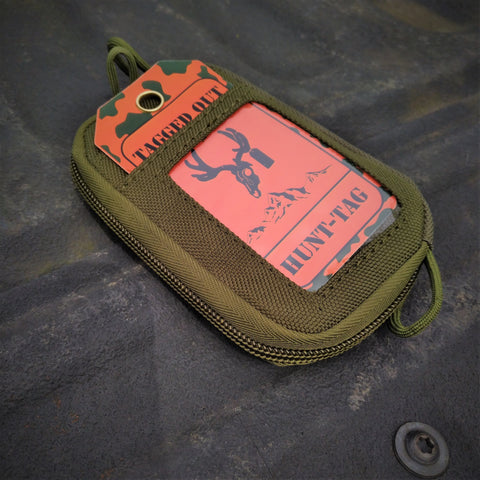
Hunt-Tag builds storage with real field conditions in mind. The Hunt-Tag Tech Pouch keeps tags dry and easy to reach without adding bulk.
For a slimmer option, the Hunt-Tag Wallet stores tags in a compact format that fits cleanly in a chest pocket or pack lid. Both options help protect the details that matter most when it is time to show your documentation.
The investment in proper tagging materials and storage is small. The cost of getting it wrong can be much higher, from fines to lost game to missed opportunities.
Shop now and set yourself up with Hunt-Tag gear built to keep your hunt tags clear, protected, and ready when it counts.