

Preparing Your Tags Before the Season Starts: A Pre-Season Checklist
You spend months scouting, practicing at the range, and fine-tuning your gear. Then, after taking a clean animal, you realize your tag is sitting in the truck, soaked through, or expired.
In that moment, pride quickly turns into stress over paperwork. This is exactly the kind of situation Hunt-Tag is built to prevent.
In many cases, tagging issues don’t start after the harvest. Instead, they begin weeks earlier, when tags get tossed in a drawer, left in a truck, or when current state regulations go unchecked.
While a pre-season hunting tag checklist may not feel as important as dialing in your rifle or scouting a new unit, it plays a critical role. In fact, it’s what separates a smooth, legal harvest from a costly mistake.
So, let’s walk through how to organize and protect your documents before opening day, so your system works when it matters most.
Why Tagging Problems Start Before the Season
Many of us treat tagging as an afterthought. We assume we’ll figure it out once the animal is down. That is a recipe for disaster.
Think about the environment after a successful harvest. Your adrenaline is surging. It might be snowing, raining, or getting dark. Your hands are likely cold or messy. This is exactly when you need to find your tag, fill it out, and attach it correctly.
If you haven't prepped, things go wrong quickly. The pen won't write in the cold. You can't remember if you need to note the date or call in a confirmation number. Your phone is dead, and e-tagging is your only option.
Prepared hunters treat their tagging system with the same respect as their rifle or optics. A crumpled, unreadable tag is just as useless as a bow left at the trailhead.
Building Your Pre-Season Hunting Tag Checklist
A solid checklist isn't just a reminder to grab your license. It’s a workflow that prevents real-world headaches in the backcountry.
Verify Your Tags and Licenses
This sounds simple, yet it trips up hunters every year. Pull out every document you plan to use and verify the details:
-
Expiration Dates: Some tags follow the calendar year, while others follow the specific season. Never assume; check the print.
-
Species and Zone Accuracy: Ensure your tag matches your physical location. A tag for the North Zone won't help you if you're hunting in the South.
-
Personal Info: Confirm your name and license number are correct. Processing errors happen, and a typo can cause friction with a game warden.
If you find an error, call your state agency immediately. Corrections usually take time that you don't have on the eve of a hunt.
Master Your State's Tagging Method
Regulations change constantly. What worked last year might be illegal today. Some states require physical paper, some use apps, and many now use a hybrid e-tagging system with paper backups.
You need to know your specific requirements. Check your state's official wildlife agency website. For instance, the Texas Parks & Wildlife Department provides a clear breakdown of exactly how to handle a harvest.
Ask yourself:
-
Does my state require a physical signature or a digital submit button?
-
What is the timeframe for tagging? Some states require it immediately; others give you a 24-hour window.
-
Where should the tag be attached to the carcass?
Organize Physical Tags for the Field
If you’re using paper, moisture is your enemy. A tag that has lived in your sweaty wallet for three months will fall apart the moment it touches a damp animal.
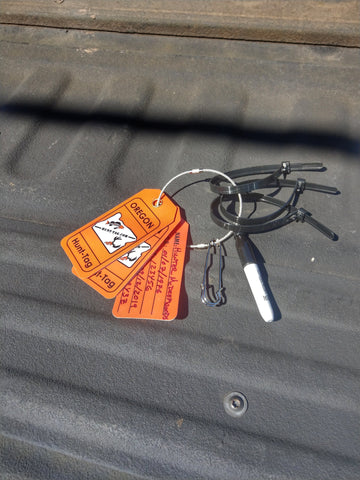
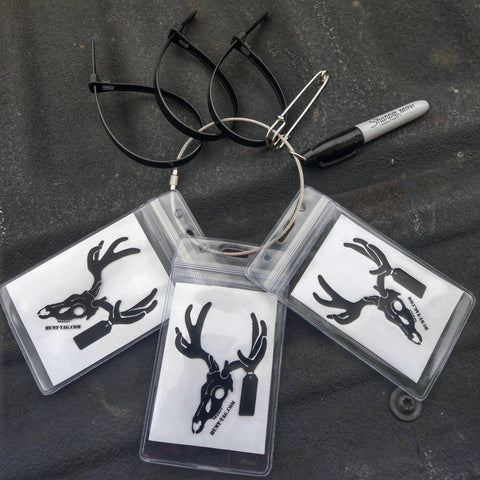
At Hunt-Tag, we designed our Waterproof Tag Kits to withstand blood, rain, and snow without failing.
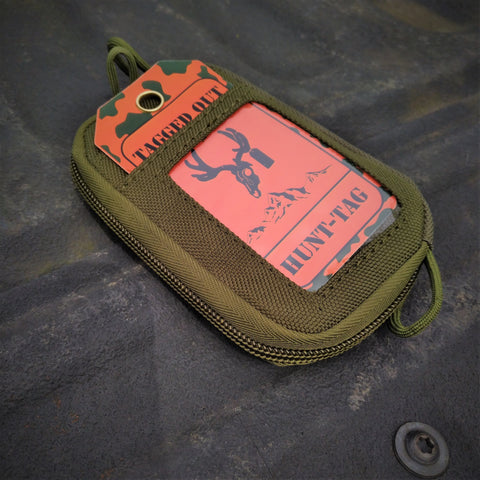
Keep them accessible. Don't bury your tags at the bottom of a heavy pack. A dedicated Tag Wallet keeps everything in one spot so you don't have to dig through gear with cold fingers.
Carry a Space Pen. Standard ballpoint pens fail in freezing temperatures or on damp paper. Use a permanent marker or an outdoor pen, like the one in our Paper Tag Kit.
Preparing Your E-Tagging System
If your state uses digital tags, your phone is now survival gear. Here’s how to make the best of them:
-
Download the App Early: Don’t wait until you’re at the trailhead. Download the app and log in while you still have high-speed internet.
-
Test the Interface: Navigate the app at home. Know where the harvest report section is before you're standing in the woods.
-
Plan for Dead Zones: Most big game live where cell service doesn't. Know if your app works offline or if you need to carry a paper backup for areas with no signal.
-
Battery Management: A dead phone is a legal liability. Carry a portable power bank and keep your device in a protective Tech Pouch to preserve battery life in the cold.
FAQs About Pre-season Hunting Tag Checklist
What should I do if my tag is physically destroyed in the field?
Stop hunting and contact your local game warden or state wildlife office. They can often issue a duplicate, but you must report the damage before you harvest an animal. Attempting to tag an animal with an illegible scrap of paper can lead to a citation.
Can I use a photo of my tag on my phone instead of the physical copy?
In most states, a photo isn’t a legal substitute for a physical tag or an official e-tagging app. Always check your local regulations, as proof of electronic license rules varies significantly between states.
Do I need to tag the animal before I field dress it?
Most regulations require the tag to be immediately attached or validated upon harvest. Usually, this means before you move the animal or begin field dressing.
What happens if I forget my pen?
If you’re required to notch or sign a paper tag, you’re technically non-compliant without a writing utensil. This is why keeping a backup marker inside your waterproof tag kit is a smart move.
How do I attach a tag if the animal doesn't have antlers?
Regulations usually specify attaching the tag to a hind leg (through the brisket or hamstring) or through the ear. Always carry zip ties or string in your tag kit to make this process fast and secure.
Get Ahead of the Season
At the end of the day, tagging isn’t something to figure out in the moment. It’s something you prepare for long before the hunt begins. When your tags are verified, protected, and easy to access, everything that follows becomes smoother and far less stressful.
Hunt-Tag is built around that idea. Instead of scrambling after the harvest, you walk in with a system that already works. Your tags are organized, your tools are ready, and your process is clear from the start.
If you want to head into the season confident and fully prepared, explore Hunt-Tag kits designed to keep your tagging system organized, protected, and ready when it matters most.