

Hunt Tag Placement Guide: Where and How to Attach Your Tags
You did everything right. You woke up before dawn, glassed the ridges for hours, and made a clean shot.
Now you’re standing over your elk as the sun dips below the horizon. You pull out your tag, fill it in, and then pause. So where exactly should it go?
This is exactly the moment Hunt-Tag is built for, when small decisions matter most, and having a system makes all the difference.
However, this is also where many hunters get tripped up. Most state instructions are vague, field conditions are messy, and 'attached' isn’t always the same as 'securely attached' in a visible location.
As a result, tags can fall off during a long drag or smear into an unreadable mess. These aren’t careless mistakes. Instead, they’re common problems even experienced hunters face when they lack a clear system for hunt tag placement.
In the end, to protect your meat and your license, you need a plan that balances visibility, durability, and accessibility.
Why Proper Hunt Tag Placement Is Non-Negotiable
Wildlife agencies use tags for accountability. A tag links a specific animal to your license at a specific time. This helps prevent poaching and ensures harvest data stays accurate. According to Find A Hunt, maintaining a clear chain of custody through tagging is a primary requirement for legal hunting.
If your tag falls off or stays hidden, you’ve broken that chain. Even if you’re an ethical hunter, a missing tag puts you in a tough spot. Depending on where you hunt, an improperly tagged animal can lead to:
-
Fines range from $200 to $500.
-
Confiscation of your hard-earned meat.
-
Loss of future hunting privileges.
Proper placement removes the stress and lets you focus on the pack out.
The Three Rules of Field Tagging
Every time you attach a tag, it needs to pass three simple tests:
1. Visibility: Can an Officer See It?
The tag must be visible without someone having to flip the animal over or dig through your pack.
If a game warden walks up to your truck or your quarters, they should see the tag immediately.
Tucking it away where it won't get lost often means it's hidden, which can look suspicious.
2. Durability: Will It Survive the Weather?
Paper tags hate water, and blood is even worse for ink. Your tag needs to survive rain, snow, and the friction of being pressed against a pack frame for miles. If the information on the tag isn't readable, it's essentially useless.
3. Accessibility: Can You Check It Quickly?
During a long hike out, gear shifts. You should be able to glance at your load and confirm the tag is still there without unpacking everything. If you can’t verify it yourself, you won't know there's a problem until it's too late.
Where to Attach Your Tag: Common Scenarios
The best attachment point changes depending on how you’re moving the animal.
For Whole Animals (Deer or Antelope)
In fact, many state regulations support this approach. For hoofed big game, tags are typically required to be attached securely in one of the following ways: around one hind leg between the hoof and ankle joint, around the hock tendon directly above the ankle joint, or around the base of the antler or horn.
Avoid these spots:
-
The Ear: These can tear easily and are often covered during transport.
-
Top of the Antlers: This doesn't work for antlerless tags, and antlers can snap during a rough drag.
For Quartered Meat in Game Bags
This is where hunt tag placement gets tricky. When the animal is in pieces, the rule is usually to attach the tag to the largest portion (typically a rear quarter).
If that quarter is at the bottom of your pack, attach the tag to a visible strap on the outside of your pack frame, but keep it tethered to the meat inside.
This way, the tag is visible and accessible while remaining physically tied to the harvest.
Protecting Your Tag from Field Damage
Knowing where to put the tag is only half the battle. You also have to make sure it survives the trip.
Shielding from Moisture
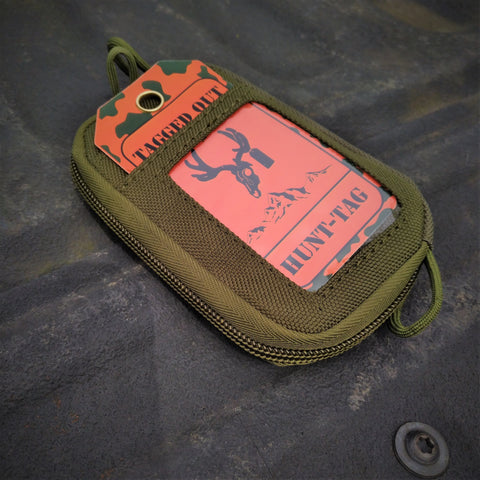
Paper and sweat don't mix. Put your tag in a waterproof sleeve before you even leave your vehicle. Using a Hunt-Tag Wallet or a Tech Pouch gives you a clear window to read the tag while keeping it bone-dry.
Preventing Attachment Failure
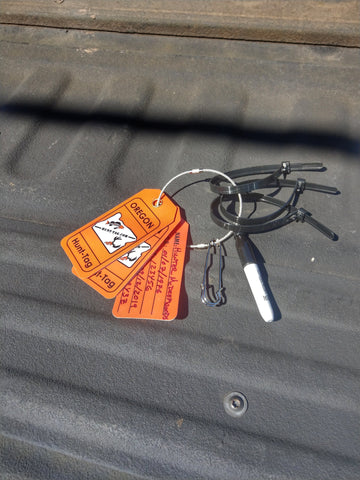
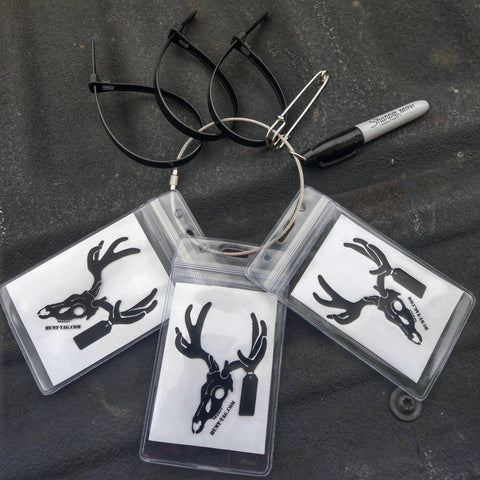
Zip ties can snap, and strings can come untied. The most reliable method is to use a primary connection (like a heavy-duty zip tie). If one fails, the other holds. A complete tag kit provides these redundant options so you aren't stuck improvising with old baling twine.
The E-Tag Factor
Electronic tagging is growing in popularity, but it doesn't always mean you're done with physical records. Many states require you to carry a printed confirmation or a tag header that must be attached to the animal.
If you hunt in Oregon, for example, you still need to follow specific display rules even after reporting on your phone. Always treat your printed e-tag confirmation exactly like a traditional paper tag: protect it, secure it, and keep it visible.
FAQs: Practical Answers for the Field
Where is the best place to attach a tag on an elk?
For an elk, it depends on whether it's whole or quartered. If quartered, attach the tag to the game bag containing the largest rear quarter. Ensure the tag is positioned near the top of your pack so it's readily visible to an officer without unloading the entire frame.
What should I do if my tag gets torn during the pack out?
If a tag tears, immediately secure the pieces in a clear plastic bag or a waterproof pouch. Use extra zip ties to ensure the pouch is firmly anchored to the carcass. As long as the information is legible and the tag is present, most officers will see that you made an honest effort to protect it.
Can I just keep the tag in my pocket until I reach my truck?
No. In almost every state, the law requires the tag to be attached to the animal as soon as it is killed or before it’s moved. Moving an untagged animal, even just a few yards, can be considered a violation. Attach it before you start your work.
Do I need to tag individual bags of meat?
Generally, no. You only need to tag the largest portion of the animal. However, if you’re transporting meat for multiple people, each person’s portions must be clearly identifiable. Keeping your main tag on the largest quarter is the standard legal requirement.
Protect Your Hunt from Start to Finish
In the end, proper hunt tag placement isn’t about memorizing rules. It’s about building a system you can trust when the pressure is on.
When your tag is visible, secure, and protected, everything else becomes simpler. Inspections go faster. Stress stays low. And your focus stays where it belongs, on the hunt and the work that follows.
Hunt-Tag is designed for exactly that moment. From tag kits that keep everything in one place to wallets and pouches that protect your tag from the weather and wear, the goal is to make tagging feel automatic rather than uncertain.
If you want a system that helps you get it right every time, shop Hunt-Tag gear built to handle real field conditions.