

How to Protect Hunt Tags from Weather, Blood, and Rough Terrain
You've drawn a tag you waited years for. You've scouted the unit, planned the logistics, and finally put an animal on the ground.
And then, somewhere between field dressing and the trailhead, your tag becomes unreadable. Maybe the rain got to it. Maybe blood soaked through the paper and smeared the ink. Maybe it just disintegrated in your pocket after three days of hard hiking.
This is the problem Hunt-Tag was built to address. The materials most state agencies provide for hunt tags, like standard paper, basic card stock, and sometimes thermal-printed receipts were never designed to survive the conditions hunters face.
If you want to protect hunt tags from weather, blood, and terrain, you need to understand what destroys them first.
The Paper Problem Nobody Warned You About
Most hunters receive their tags as paper documents. Some states use heavier cardstock. A few have moved toward synthetic materials. But the majority still issue tags that are essentially printer paper with official markings.
Paper has a fundamental weakness: it absorbs moisture. Whether that moisture comes from rain, snow, sweat, or the fluids released during field dressing, the result is the same. The fibers swell, the ink runs, and the document's structural integrity fails.
This becomes especially problematic with thermal-printed tags, the kind that come from self-service kiosks or home printers. Thermal printing doesn't use traditional ink. Instead, it applies heat to chemically treated paper, which darkens to form text.
The problem is that heat, friction, and moisture can all cause that text to fade or smear, sometimes within hours under the right conditions.
Protect Hunt Tags from Weather Before You Leave Camp
The most effective protection happens before you ever step into the field. Once you're miles from the truck with an animal down, your options narrow considerably.
Lamination and Waterproof Sleeves
The simplest approach is physical barrier protection. Laminating your tags creates a sealed, waterproof envelope around the document.
However, lamination comes with a significant constraint: you can't write on a laminated tag.
Some hunters solve this by laminating everything except the section that requires notation, then using a grease pencil or permanent marker to fill in the required information.
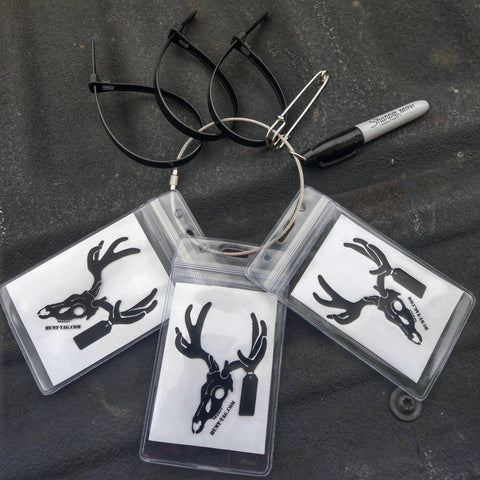
Others use waterproof sleeves with a resealable opening, which allows access when needed but keeps moisture out the rest of the time.
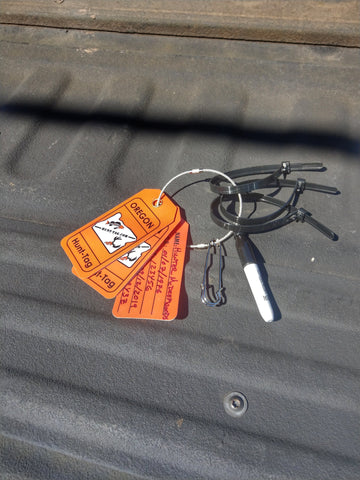
The Hunt-Tag Paper Tag Kit was designed specifically for this situation, providing durable, waterproof tag bags that keeps your tags protected while remaining accessible for legally required marking.
Where You Carry Matters More Than You Think
Even waterproof protection fails if you store your tag in the wrong place.
Chest pockets trap body heat and moisture. Back pockets expose tags to constant friction and pressure. Outer jacket pockets seem logical until you realize how often they get soaked, snagged, or compressed against surfaces.
The ideal storage location is somewhere that stays dry, experiences minimal friction, and remains accessible without major gear shuffling. For many hunters, that means a dedicated tag wallet or pouch that clips to an internal layer or fits in a zippered compartment.
A Hunt-Tag Wallet keeps your tags separate from other pocket contents, such as keys and fire starters that can cause abrasion or puncture damage over time.
Blood and Field Dressing: The Underrated Tag Killer
Rain gets most of the attention when hunters think about tag protection. But blood and other biological fluids pose a more immediate threat in many hunting scenarios.
If your tag is in a front pocket, or worse, stashed in the same bag as your knife and gloves, contamination is almost inevitable.
Blood doesn't just wet paper; it stains it. Even after drying, blood-soaked tags often become stiff, warped, and difficult to read. The iron in blood can also cause chemical reactions with certain inks, accelerating fading.
Managing Tags During the Harvest Process
The practical solution is staged separation. Before you begin field dressing, secure your tag so it can’t come into contact with fluids.
If you're using a pack, place it in an interior compartment and seal it with a dry bag or ziplock. If you're working with a partner, hand it off.
Once the animal is processed and you've cleaned up, retrieve the tag for attachment. Most states require the tag to be attached to the animal before transport, but there's no rule saying it needs to be in your pocket while you're elbow-deep in a body cavity.
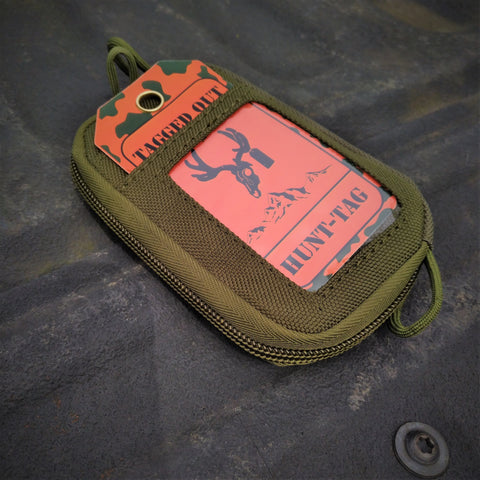
The Tech Pouch offers water-resistant storage that works well for exactly this kind of staged approach, keeping tags secure and clean until you're ready to attach them.
Terrain Damage
Weather and blood are dramatic threats. Terrain damage is slower and more insidious.
Every time you bend, climb, or crawl, your clothing shifts. Contents move. Paper tags fold, crease, and rub against other objects. Over a multi-day hunt, these small interactions accumulate.
Hard-sided storage solves part of this problem, but rigid containers can be bulky and uncomfortable to carry and may not fit in existing pocket systems.
The better solution is semi-rigid or reinforced flexible storage, like the Tech Pouch that protects without sacrificing packability.
Frequently Asked Questions
Can I use a regular ziplock bag to protect my hunting tag?
Ziplock bags offer basic protection and are better than nothing, but they have significant limitations.
Standard bags puncture easily, the seals can fail under pressure, and they don't prevent abrasion damage from other pocket contents.
Purpose-designed tag protection systems provide more reliable results for the demanding conditions hunters face.
What should I do if my hunt tag gets wet or damaged before I harvest an animal?
Contact your state wildlife agency immediately. Most states have procedures for replacing damaged tags before harvest, but waiting until after you've taken an animal complicates the situation significantly.
Document the damage with photos and explain the circumstances when you request replacement.
Are laminated hunt tags legal in all states?
Lamination legality varies by state and sometimes by tag type. Some states explicitly prohibit full lamination because it prevents required notations. Others allow partial lamination or waterproof sleeves.
Check your specific state regulations before laminating, and when in doubt, contact your wildlife agency directly for guidance.
Protect Hunt Tags from Weather, Mud, and Moisture with Hunt-Tag
Rain, snow, blood, sweat, mud, friction, and temperature swings were never part of the design when most state-issued tags were created.
Yet those are the exact conditions tags face in the field. That is why Hunt-Tag focuses on protection that holds up.
Waterproof storage, like the Tech Pouch and the Hunt-Tag Wallet, helps shield your tags from weather and wear.
Backup e-tag options and a dedicated place in your pack keep everything secure and easy to reach when it counts.
Explore the full range of Hunt-Tag kits built for real hunting conditions, because the tag you protect today is the proof you will need when it matters most.