

How to Keep Your Hunt Tags Readable in Extreme Conditions
You may have spent months studying maps and dialing in your rifle. On a cold morning, it all pays off. The animal is down, and the hard work of the hunt is finally behind you.
Now comes the part that should be simple: filling out your tag. But this is where many hunters run into problems, especially when they fail to keep hunt tags readable in real field conditions.
That paper tag you printed at home has been sitting in a damp pocket for days. The ink is blurred, and the paper feels like a wet napkin. When you try to sign it, the pen tears right through.
This isn’t just frustrating. If you can’t keep hunt tags readable, they can’t do their job. Game wardens see these situations often, but the responsibility to provide clear proof still falls on you.
That is exactly the problem Hunt-Tag is built to solve, helping hunters keep their tags protected, readable, and ready in the conditions that actually exist in the field.
Why State-Issued Tags Fail in the Field
Let’s be honest about the gear states give us. Paper tags printed on standard stock are made for administrative ease, not for a mountainside.
A tag must be kept in a condition that allows an officer to read it easily. This is hard to do when your tag is subjected to the elements.
Your tag faces a lot of abuse during a week-long hunt:
-
Moisture: Rain, snow, and even the sweat in your pocket will soak into paper.
-
Body Fluids: Once the animal is down, blood gets on everything.
-
Physical Stress: Folding, crushing, and shoving a tag into a pack wears down the fibers.
-
Temperature: Bitter cold can make paper brittle, while heat can cause ink to fade.
The tag you get from the state isn't built for your environment. It’s a design mismatch that you have to solve.
What Happens When a Tag Becomes Unreadable
An unreadable tag creates legal problems. Most states, like Texas, require your harvest info to stay clear until the meat is processed or reaches its destination. If a warden stops you and can't verify the date or species, you might face a citation.
The tag is your protection. It proves you followed the rules. When the ink smears, your proof disappears. Beyond the legal side, you also need that info for your final harvest report. If the numbers are gone, you’re left guessing.
Keep Hunt Tags Readable with Better Gear
Keeping your tags in good shape means treating them like any other piece of high-end gear. You wouldn't let your optics get filled with mud, and your tags deserve the same care.
Use Waterproof Storage
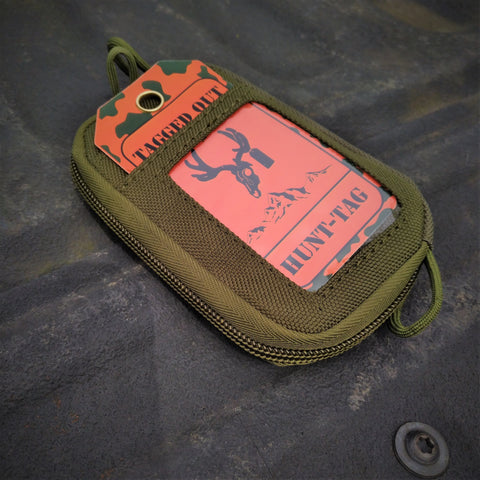
The best way to protect a tag is to keep it dry before you ever need it. Storing it in a dedicated Hunt-Tag Wallet keeps it flat and dry. This prevents the constant folding and rubbing that happens when a tag is loose in a pocket.
If you carry tags for multiple zones, a wallet keeps them organized so you don't grab the wrong one in the heat of the moment.
Use Protective Pouches
The risk to your tag is highest right after you attach it to the animal. This is when it meets mud, blood, and the friction of the pack-out. A simple plastic baggie might work for an hour, but it's likely to tear.
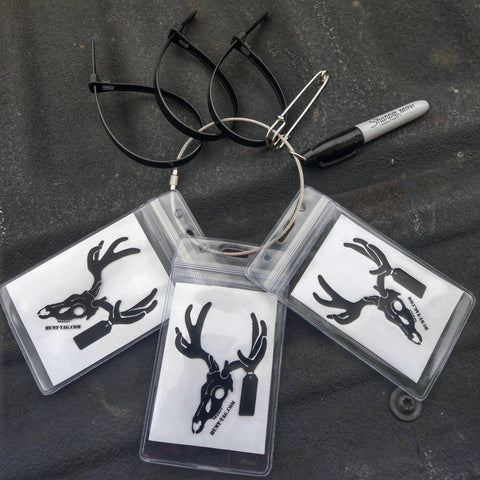
A Hunt-Tag Tech Pouch is a much better choice. It’s built to shield your documents and electronics from moisture. A heavy-duty pouch keeps the tag protected during a long hike back to the truck.
Choose the Right Pen
Standard ballpoint pens are famous for failing in the cold. The ink stops flowing, or it smears the moment a drop of water hits the page.
Carry a fine-point permanent marker or an all-weather pen. These tools are made to write on damp surfaces without running. Some hunters even carry a pencil as a backup. Graphite won't wash away, even if the paper gets soaked.
Build a Routine
Consistency prevents mistakes. Pick one specific spot in your pack or clothing for your tags and always keep them there. Check them every morning to make sure they are still dry.
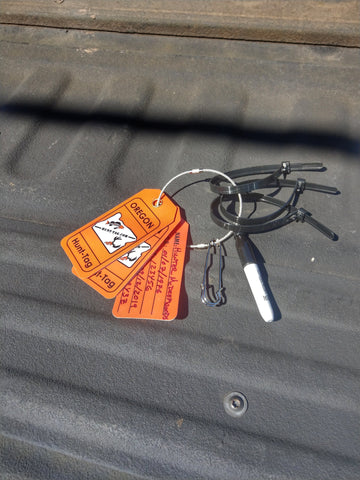
A quick Hunt-Tag System Paper Tag Kit gives you everything you need in one organized spot, so you aren't hunting for a waterproof tag bag or a pen when you should be focused on the harvest.
Treat Tags Like Critical Gear
We spend a lot of time testing our boots and rifles, but we often ignore the one piece of paper that makes the hunt legal. A failed tag can end your trip just as fast as a broken bowstring.
Shift your mindset. Protect your tags, store them right, and use the proper tools to fill them out. At Hunt-Tag, we build our kits because we know the conditions you face. We want your tag to be as tough and reliable as the rest of your kit.
Frequently Asked Questions
How should I attach a tag to an animal to prevent damage?
Attach the tag to a sturdy part of the animal, such as the base of an antler or a slit in the ear, using a zip tie or wire. Position it so it won't drag on the ground or get caught on brush during the pack-out.
What is the burden of proof regarding tag legibility?
In most jurisdictions, the hunter is legally responsible for ensuring the tag is filled out correctly and remains readable.
If a tag becomes destroyed by the elements, a game warden may consider it a violation of "failure to properly tag," regardless of whether you actually harvested the animal legally.
Are there specific inks that are better for blood and moisture?
Pigment-based inks and permanent markers are superior to standard dye-based ballpoint pens. These inks bond more strongly to the paper fibers and are less likely to "bleed" or spread when they come into contact with water or organic fluids.
What do I do if my tag is physically torn?
Collect all the pieces and keep them together in a clear plastic bag. Immediately take a photo of the pieces and contact the local wildlife agency or a game warden to report the damage. They can advise you on how to proceed legally before you move the animal.
Keep Hunt Tags Readable When It Matters Most with Hunt-Tag
At the end of the day, keeping your hunt tags readable isn’t about being overly careful. It’s about protecting the proof that backs up everything you did right in the field. A clear tag turns a stressful moment into a simple one. An unreadable tag does the opposite.
Hunt-Tag was built around that exact problem. From wallets that keep tags flat and dry, to pouches that protect them during the pack out, to kits that keep everything in one place, the goal is to make sure your tags hold up in the same conditions you do.
A small change in how you store and handle your tags can prevent major issues later. Keep them dry. Keep them protected. Keep them easy to reach.
If you want a setup that helps you keep hunt tags readable every time, shop now and explore Hunt-Tag kits designed for real hunting conditions.