

What Makes a High-Quality Hunting Tag Holder? (Buyer Checklist)
TL;DR: The best hunting tag holder features protect your harvest information when conditions get rough.
Look for weather protection, durable materials, secure closures, strong attachment points, clear visibility, enough space for your documents, and easy handling with cold hands or gloves.
A good holder keeps your tag dry, readable, attached, and ready through rain, mud, blood, transport, and processing. Hunt-Tag kits are built around these real field needs, so you don’t have to improvise after the animal is down.
What Makes a High-Quality Hunting Tag Holder? A Buyer Checklist
Three days of hiking, glassing, and waiting finally come down to one clean shot. The animal is down, your heart is still hammering, and now the real work begins. Field dressing. Harvest validation. Tagging. Packing out before the weather, the dark, or fatigue gets the upper hand.
That’s when a flimsy tag holder can turn into a real problem.
Your hands are cold. Your gloves are bloody. Rain has started to fall, and the tag information you need to attach has to survive the drag, the truck ride, and the handoff at the processor.
If it gets wet, torn, unreadable, or lost, a small piece of gear can create a big headache.
A hunting tag holder may not seem as exciting as a new optic or pack, but it protects one of the most important parts of your harvest, the proof that ties everything back to your license.
In this guide, we’ll cover:
-
Why your tag holder matters after the shot
-
Which hunting tag holder features are worth checking before you buy
-
How Hunt-Tag works for both paper tags and e-tag confirmations
-
And what to ask before trusting any tag holder in the field.
The Real Problem a Tag Holder Solves
A tag holder has one main job: to keep your harvest information protected, readable, and attached until you no longer need it there.
That matters when paper tags get wet, e-tag confirmations smear, ink runs, plastic cracks in the cold, or clips come loose during the pack out.
A good tag holder helps protect the final step of a hunt you worked hard for, especially when the weather, terrain, and timing aren’t on your side.
Hunting Tag Holder Features That Matter
When choosing a tag holder, consider what it needs to handle after the shot. The right one should protect your harvest information, stay attached, and be easy to use when conditions get messy.
Weather Protection That Holds Up
Your tag holder needs to handle rain, snow, mud, blood, and regular field wear.
Look for a design that seals well on all sides, not just a sleeve that leaves parts of the tag exposed.
Flexible, durable materials are also important because thin plastic can crack in the cold or split under pressure.
Durable Materials That Can Handle the Field
A good tag holder should last beyond one hunt. It should feel sturdy in your hand and hold up when it is packed, pulled, bumped, or pressed against an animal.
If the holder has stitching, seams, clips, or attachment points, check those carefully. Those are usually the first places to fail.
A Secure Closure That Stays Shut
Your holder will get moved, dragged, bumped, and handled. Because of that, the closure needs to stay shut.
A zipper, fold-over seal, or strong snap is usually better than something that pops open with a light tug. If it opens too easily at home, it will likely fail in the field.
An Attachment Method That Survives the Pack Out
Your tag holder must remain attached to an antler, game bag, quarter of meat, pack frame, or carcass during transport.
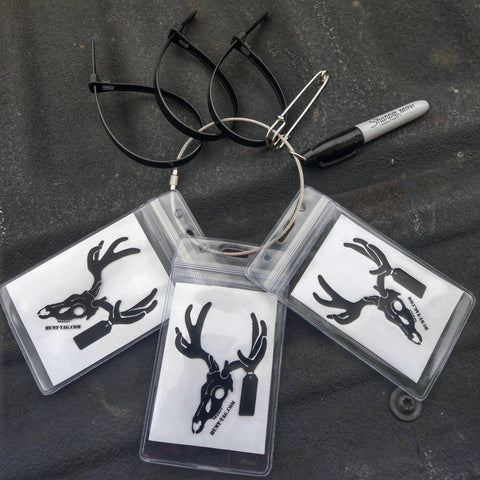
Look for strong loops, clips, grommets, or attachment points that work with zip ties or cord.
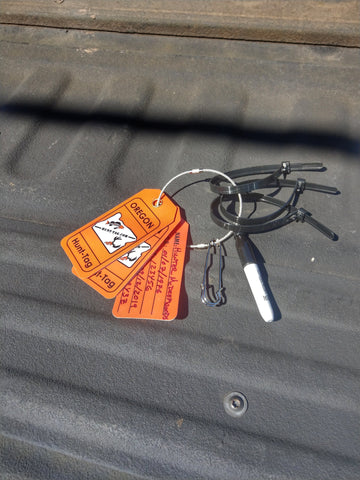
Hunt-Tag Kits are designed with this in mind, providing multiple holders so harvest information stays with meat, antlers, hides, or other parts that may travel separately.
Clear Visibility So Details Stay Readable
Your tag information should be easy to read without opening the holder. Choose a clear window that doesn’t fog, scratch easily, or distort the text.
This matters for paper tags and printed e-tag confirmations, especially when someone needs to quickly verify your information.
Enough Space for Your Documents
Before you buy a holder, think about what you need to carry. Some states use paper tags. Others require printed e-tag confirmations or extra harvest details.
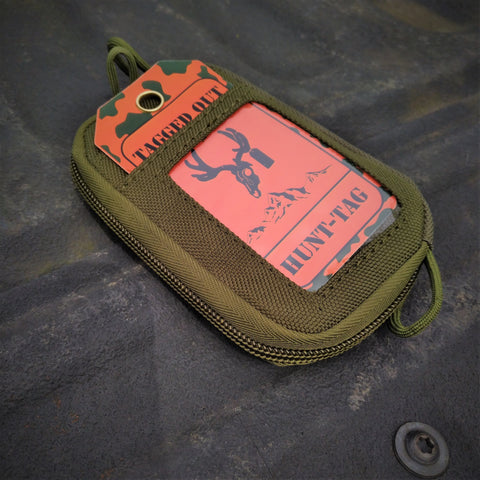
The Hunt-Tag Paper Tag Kit is designed for traditional paper tags, while the Tagged Out Generic Tag Kit works well for printed confirmations and flexible harvest documentation.
Easy to Use With Cold Hands or Gloves
You’ll probably use your tag holder when your hands are cold, wet, or messy. Make sure it’s easy to open, close, and attach without fighting tiny zippers or complicated parts.
Simple is better when daylight is fading, and you still have work to do.
Compact Enough to Pack Every Time
A tag holder should fit easily in your pack, vest, bino harness, or truck kit. If it feels bulky or awkward, you may leave it behind.
The Hunt-Tag Wallet and Tech Pouch help keep tag holders, documents, electronics, and small field essentials organized without adding unnecessary bulk.
Warning Signs of a Poor Quality Tag Holder
Knowing what to avoid can save you a lot of trouble in the field. Before you trust a tag holder with your harvest information, watch for these red flags:
-
Weak or brittle plastic that feels thin, stiff, or crinkly. It may crack in the cold or tear under pressure.
-
Loose closures that pop open too easily. If it opens with light handling at home, it probably won’t hold up during a pack out.
-
Flimsy attachment points, like thin loops, cheap clips, or glued-on pieces, can break or pull loose.
-
Hard-to-read surfaces that are tinted, foggy, scratched, or cloudy. Your tag details should be easy to see.
-
Bulky designs that are awkward to carry. If it’s annoying to pack, you may leave it behind.
-
Complicated parts that are hard to use with cold, wet, or gloved hands.
-
Materials not made for hunting conditions. Office badge holders, basic sleeves, and plastic bags may work in mild weather, but they aren’t built for blood, mud, cold, or rough handling.
Choose a Tag Holder Built for Real Field Conditions
A good tag holder helps protect the proof behind your harvest when the field gets messy, cold, wet, or rushed.
Hunt-Tag is built for that exact moment. Our kits help keep your harvest information readable, secure, and easy to access from the first tag check to the final handoff at the processor.
Before you trust any holder in the field, make sure it can handle weather, rough handling, secure attachment, and cold hands. If it can’t, it may not be worth the risk.
After all the work you put into a successful hunt, the final step should feel simple. Shop Hunt-Tag Kits today and choose a tagging setup built to stay with you from shot to pack out
Frequently Asked Questions
Can I just use a ziplock bag to protect my hunting tag?
You can, and it may offer some moisture protection. However, ziplock bags can tear, fog up, open accidentally, and lack a secure attachment method. A purpose-built tag holder is much more reliable in real field conditions.
What is the difference between a tag holder for paper tags and one for e-tag confirmations?
Paper tag holders are usually designed to fit official state tags, while e-tag holders are made for printed confirmations, screenshots, or written harvest details.
Do I still need to follow my state's tagging rules if I use a Hunt-Tag holder?
Yes. Hunt-Tag doesn’t replace your license, permit, official tag, or state validation process. You still need to follow your state’s regulations.
Hunt-Tag helps you protect and organize the required harvest information after that process is complete.