

The Ultimate Hunting Tag Protection Kit (What You Actually Need)
TL;DR: A hunting tag protection kit helps you avoid messy mistakes right after a harvest, when your tag gets wet, your pen fails, your attachment breaks, or your e-tag details are hard to access.
Instead of improvising in the field, you can build a small system before opening day with waterproof tag storage, a secure attachment method, a reliable pen, backup labels, and state-specific tagging instructions.
Hunt-Tag kits give you a ready-to-use setup that keeps your harvest information dry, readable, attached, and easy to access when it matters most.
The Ultimate Hunting Tag Protection Kit (What You Actually Need)
You’ve spent weeks getting ready. You scouted, checked your zero, fixed your gear, and packed for every condition.
Then the animal is down, and suddenly tagging feels like an afterthought. The tag is crumpled, the paper is damp, the pen will not write, and you’re trying to solve it all in the field.
That happens more often than most hunters admit. A hunting tag protection kit keeps things simple by providing a single, organized system to keep your tag dry, readable, secure, and ready when it matters.
In this blog post by Hunt-Tag, we’ll cover:
-
Why tagging problems often happen after the harvest
-
What a hunting tag protection kit should include
-
How Hunt-Tag helps keep your tagging process simple and organized
The Post-Harvest Moment Is Where Problems Start
Here’s the situation. You’ve just put down an elk at last light. The adrenaline is fading. The temperature is dropping. You’re two miles from your truck, it’s starting to rain, and you need to tag this animal before you do anything else.
You pull out your paper tag. It’s already soft from the moisture in your pack. You dig for a pen. It skips across the wet surface. You try to attach the tag to the animal, but the only thing you have is a zip tie buried in your first-aid kit.
By the time you get everything sorted, the tag is partially torn, the ink is smeared, and you’re not entirely sure if what you wrote is legible.
The post-harvest moment is chaotic by nature. You’re tired, often cold, and sometimes working in low light or bad weather. Your hands may be wet or bloody. The animal needs to be dressed and moved. Time pressure is real.
That’s exactly why a hunting tag protection kit matters. It takes a moment that’s inherently rushed and gives you a system that works anyway.
What Your Hunting Tag Protection Kit Needs
A reliable kit should be small, simple, and ready to go before opening day. Here are the essentials for your pack.
A Waterproof Tag Holder or Pouch
This is the core of the kit. Your tag, whether it’s a state-issued paper tag or a printed e-tag confirmation, needs protection from rain, snow, mud, and blood.
A standard plastic bag isn’t enough. It tears easily, lets moisture in at the seams, and doesn’t hold up to repeated handling.
A purpose-built waterproof holder keeps your tag flat, readable, and intact. It also makes the tag easier to present during a check, which matters more than you might expect.
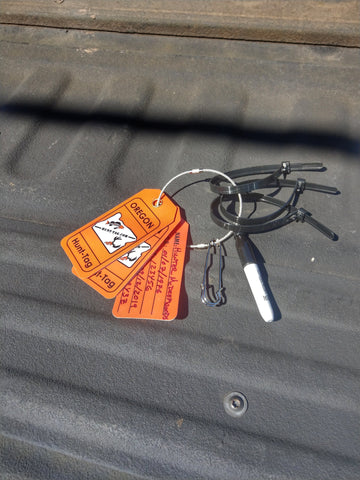
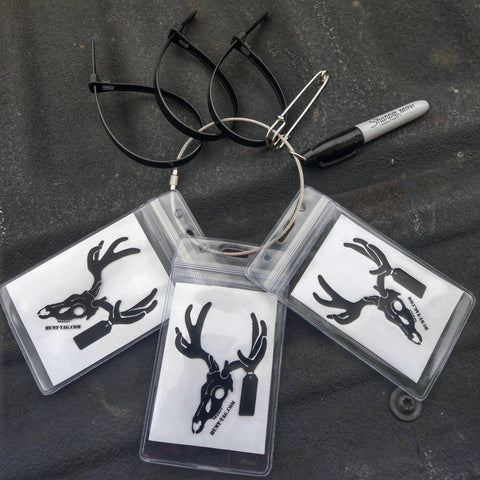
The Hunt-Tag Paper Tag Kit is designed specifically for this. It keeps paper tags dry and protected in conditions that would destroy a bare tag in minutes.
A Secure Attachment Method
Once your tag is filled out, it must remain attached to the animal. Most states require the tag to remain with the carcass during transport. Some require it to stay attached until processing is complete.
A reusable, adjustable attachment, like the kind included in Hunt-Tag Kits, gives you more control. You can move the tag as needed without damaging it or losing your harvest information.
A Pen or Marker That Works in Field Conditions
This is where most hunters get caught off guard. A standard ballpoint pen doesn’t write well on wet or cold paper.
The best option is a marker designed for outdoor use. These write on wet paper, work in cold temperatures, and don’t smear when the surface gets damp again later.
If you don’t have one, at least test your pen on wet paper before the season. You’ll quickly see if it’s up to the task.
A Backup Way to Label Meat, Antlers, Hides, or Taxidermy Items
Your main tag stays with the carcass. But what happens when you quarter the animal and pack it out in multiple trips? What about when you drop antlers at the taxidermist or take a hide to a tannery?
Many states require harvest information to stay with all parts of the animal until processing is complete. That means you may need additional labels, temporary tags, or identification markers beyond your primary tag.
The Tagged Out Generic Tag Kit includes options for this exact situation. It gives you a way to keep your harvest information attached to multiple pieces without improvising in the field.
State Specific Awareness for E-Tagging or Paper Tag Rules
Some states have moved entirely to electronic tagging. Others still use paper. A few offer both options depending on species or license type.
Your kit should match your state's requirements. If you hunt with e-tags, your kit needs to protect the printed confirmation receipt and keep it attached during transport. If you use paper tags, keep them dry and legible.
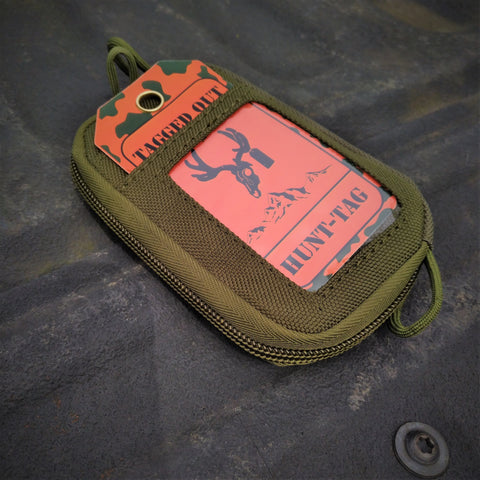
The Hunt-Tag Wallet and Tech Pouch offer protection for both paper and printed e-tag information. Having the right setup before the season means one less thing to figure out after the shot.
Keep It Simple: What to Leave Out
Part of building a reliable kit is knowing what to leave out. The goal is simplicity.
If it’s too bulky, it stays in the truck. You don't need a multi-tool or a full first-aid kit in your tagging bag; they should already be elsewhere in your pack.
Your hunting tag protection kit should be light enough to fit in a cargo pocket. You need a streamlined process that removes the guesswork when you're exhausted.
Simple systems beat rushed decisions every time. Hunt-Tag was built on this idea: providing exactly what you need to protect your tags without adding unnecessary weight.
You can explore the full range of Hunt-Tag Kits to find the right fit for your specific hunt.
Following the Rules
It’s important to remember that Hunt-Tag products don’t replace your official license or permit. You must still follow all state regulations regarding harvest validation and reporting.
Our system simply ensures that once you’ve done your part, that information stays readable and attached until you reach the processor.
If you have questions about which setup is right for your region, the Hunt-Tag contact page is a great resource.
Keep Your Tag Field Ready with Hunt-Tag Protection Kits
Your tag is the legal proof that your harvest is legitimate. It connects you to the animal, documents when and where you took it, and stays with the meat until processing is complete.
That tag needs to survive the field. Rain, snow, mud, blood, rough handling, temperature swings, and transport all threaten to make your harvest information unreadable or lost.
A hunting tag protection kit solves that problem before it starts. It gives you a waterproof holder, a secure attachment, a working pen, and a simple process you can follow even when you are exhausted and working in bad conditions.
You don’t need to build this kit from scratch. Hunt-Tag offers ready-to-use options designed specifically for the post-harvest moment. The kits are small, practical, and built for hunters who want a tagging system that works when it matters.
Shop now and get your Hunt-Tag kit ready before your next hunt.
Frequently Asked Questions
How do I attach a tag if the animal has no antlers?
In many states, if an animal is antlerless, you’re required to attach the tag through the ear or through a deep incision in the hock.
Using a durable attachment cable is often easier than trying to thread a string or wire through thick skin.
Can I just tape my tag to the carcass?
Tape often fails when it comes into contact with hair, blood, or cold temperatures. Most state regulations require the tag to be securely fastened, and a physical attachment, such as a wire or zip tie, is much more reliable than adhesive.
Should I keep my tag in my wallet instead?
While you should keep your license in your wallet, the actual harvest tag usually must be attached to the animal the moment it’s moved.
Keeping your tagging kit in your main pack ensures it’s always with the animal when the work begins.
Is a printed e-tag different from a paper tag?
Physically, yes. Often it’s just standard printer paper, which is even more fragile than traditional tag stock. This makes a waterproof holder even more critical for e-taggers who must carry a physical confirmation of the carcass tag.