

How Hunt-Tag Saves You Money on Fines and Lost Tags
TL;DR: A damaged, missing, or unreadable tag can turn a clean harvest into a costly problem. Paper tags fail in rain, snow, blood, and mud, while e-tags still need physical proof in many situations.
Hunt-Tag helps you avoid hunting fines and complications by keeping your harvest information protected, readable, attached, and easy to show when needed.
It doesn’t replace your license or state tag, but it helps protect the proof that connects your harvest to your legal paperwork.
How Tags Help You Avoid Hunting Fines After the Harvest
Picture
You put in the time, paid for the tag, burned fuel getting to the spot, and finally made a clean harvest.
Then one small problem shows up at the worst possible moment. Your tag is soaked, the ink has smeared, or the confirmation number you need is trapped on a dead phone.
That’s how a great hunt can turn into an expensive headache fast. A missing, damaged, or unreadable tag can raise questions during an inspection, delay transport, or put you at risk for fines, even when you did the right thing in the field.
Learning how to avoid hunting fines using tags starts with treating your tag like the proof it is. It shows when and where the harvest happened, and it helps keep your meat, license, and record protected.
This guide explains how:
-
How Hunt-Tag helps prevent lost tags
-
How we help reduce costly tagging mistakes
-
Why the final step of your hunt should feel simple, not stressful.
The Financial Weight of a Tagging Mistake
A tagging mistake can get expensive fast. Taking an animal without a valid tag is illegal, and state wildlife agencies take it seriously.
Depending on the state and species, fines can range from a few hundred dollars to several thousand. In more serious cases, violations can also lead to license suspension, loss of hunting privileges, or legal trouble.
That doesn’t mean a lost or damaged tag automatically puts you in the same category as someone breaking the law on purpose. Most game wardens understand that honest mistakes happen.
Still, if your harvest information is missing, unreadable, or attached incorrectly, you now have to explain what happened.
That’s not the position you want to be in after a successful hunt.
Tagging problems can also create delays beyond fines. A meat processor may hesitate to accept an animal without clear identification. A taxidermist may need harvest details for their records. Transporting game with incomplete paperwork can also raise questions you would rather avoid.
None of this has to ruin your season, but it can add stress, time, and extra costs to a hunt that should end on a high note.
Why Paper Tags Fail in the Field
If you’ve ever tried to keep a paper tag readable during a hunt, you know how quickly things can go wrong. Rain, snow, mud, sweat, and blood are all part of the experience, but paper doesn’t hold up well against any of them.
A standard paper tag, whether printed at home or issued by your state, isn’t built for rough field conditions. Ink can run after a little moisture. Paper can tear while you’re field dressing. A tag tucked in your pocket or loosely attached to an antler can fall off before you even notice.
You could protect it with a sandwich bag, packing tape, or a lamination pouch. Sometimes that helps, but those quick fixes aren’t always reliable.
Tape can peel in cold weather. Plastic bags can puncture. Lamination can trap moisture if the seal isn’t perfect.
When that happens, the harvest information you worked to fill out correctly can become unreadable or lost before you make it home.
The E-Tag Complication
E-tagging can make harvest reporting easier, but it doesn’t always remove the need for physical proof.
In many states, you still need to carry a printed confirmation or write down your confirmation number, then keep that information with the animal during transport.
That’s where things can get tricky. You may validate your harvest on your phone and get the confirmation number, but then realize you have nothing durable to attach to the animal.
Scraps of paper, cardboard, or notes written in a rush can work for a moment, but they’re easy to damage or lose. Rain, blood, mud, and rough handling can quickly turn that backup information into a problem.
If your state uses e-tags, it's helpful to plan for the physical side as well. Keep your confirmation details protected, readable, and ready to attach before you ever need them.
How Tags Help You Avoid Hunting Fines Through Simple Preparation
Using tags to avoid hunting fines isn’t about finding a shortcut. You still need to follow your state’s rules, carry the right license, validate your harvest, and complete any required reporting. No piece of gear replaces that responsibility.
A tag protection system helps you handle the practical side after you complete those steps. It keeps your harvest information dry, readable, attached, and easy to show if someone checks your animal.
Think of it this way: you already invested time, money, and effort into a successful hunt. Protecting your tag is a simple way to protect that investment when it matters most.
What You Spend on a Season
It helps to put the cost in perspective.
A non-resident elk tag can cost hundreds of dollars. A guided hunt can run several thousand. Then you add fuel, lodging, food, ammo, meat processing, taxidermy, and time off work.
By the time you make a successful harvest, you may already have $2,000 to $5,000 or more invested in the season.
Compared to that, a tag protection kit is a small cost. But not having one can lead to stress, delays, and problems that cost far more than the kit itself.
How to Avoid Hunting Fines Using Tags
The easiest shift is to stop treating tagging as an afterthought. Instead, think of it as the final piece of gear you prepare for the season.
Prepare Your Tag Protection Before You Leave Home
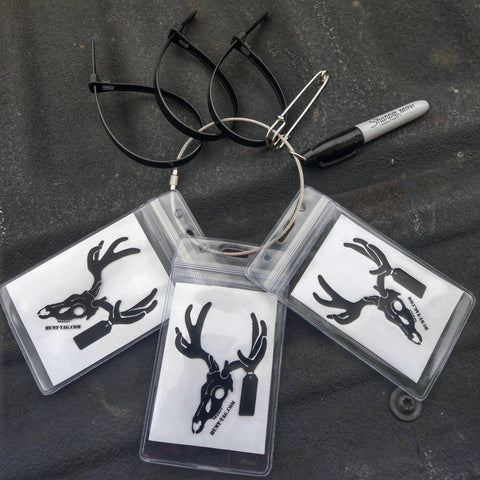
Don’t wait until the animal is down to figure out how you’ll protect your tag. Pack a ready-to-use system with a waterproof holder, a secure attachment method, and backup identification in case your harvest gets separated.
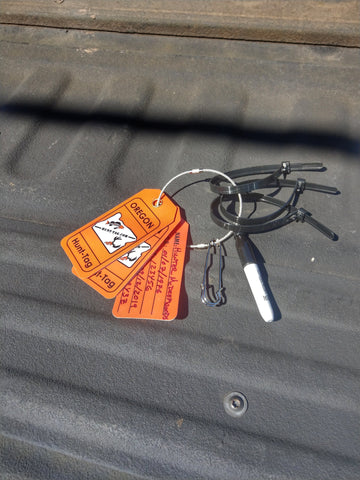
Hunt-Tag Kits are built for this exact moment, giving you what you need before pressure, weather, or fatigue get in the way.
Understand What Your State Requires
Every state has different rules for tagging, notching, validation, and transport. Some require physical tags right away, while others use e-tag systems with printed or written confirmation details.
Before you hunt, check your state’s current requirements. The Hunt-Tag Paper Tag Kit works well for physical tags, while the Tagged Out Generic Tag Kit is a flexible option for e-tag systems and backup identification.
Attach Securely and Check Your Work
Once your tag is filled out and protected, attach it properly. Take a few extra seconds to make sure it will stay put through field dressing, transport, and handling.
A quick check before you move the animal can save you a lot of stress later.
Keep Backup Gear Easy to Grab
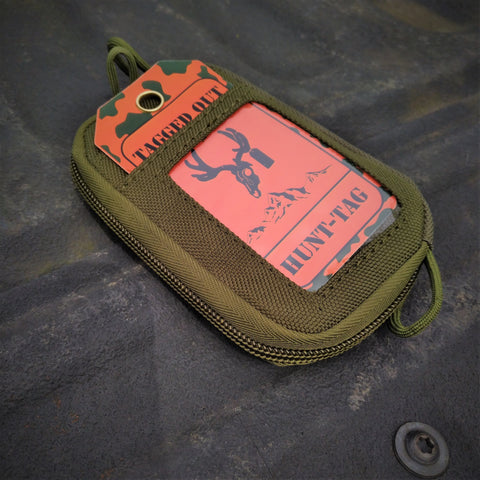
The Hunt-Tag Tech Pouch is perfect for organizing all that little gear you want easy access to, including your smartphone, GPS device, battery pack, notepad, knife, compass, and of course, your Hunt-Tag Kit.
It keeps your backup harvest information and field essentials protected, organized, and easy to grab when the post-harvest work begins.
See How Tags Help You Avoid Hunting Fines with Hunt-Tag
After everything you put into a hunt, the final step deserves just as much attention as the scouting, packing, and shot prep. A damaged or missing tag may seem small, but it can create stress, delays, and questions you don’t want after a clean harvest.
That’s why understanding how tags help you avoid hunting fines matters. Your tag is the proof that connects your harvest to your license, and Hunt-Tag helps keep that proof dry, readable, attached, and easy to show when it counts.
Pack your tag protection before you leave home, know your state requirements, and keep your backup gear within reach.
If you want to protect your harvest, avoid unnecessary tagging stress, and keep your paperwork field ready, shop Hunt-Tag Kits today.
Frequently Asked Questions
Does Hunt-Tag replace my state hunting license or tag?
No. Hunt-Tag isn’t a substitute for any license, permit, or official tag required by your state.
You must complete your state's harvest validation process and follow all applicable regulations.
Can I use Hunt-Tag in any state?
Yes. The Tagged Out Generic Tag Kit is designed to work across different states and species. However, you’re responsible for knowing your state's specific requirements.
Hunt-Tag helps you meet those requirements by keeping your documentation secure and easy to read.
What if I only hunt in good weather?
Weather is unpredictable, and even a clear day can change quickly in the field. Plus, blood and moisture from a field dressing can damage a paper tag regardless of conditions.
A protected tag is easier to read at a checkpoint or processor, which saves time even when everything else goes smoothly.
Is this necessary if I already use e-tags?
E-tag validation is convenient, but most states still require physical documentation attached to the animal during transport.
The E-Tag Kit gives you a reliable way to record and attach your confirmation details. It solves the gap between digital validation and physical requirements.