

Hunt-Tag vs Competitors: Side-by-Side Comparison
TL;DR: Most tagging problems don’t happen because hunters break the rules. They happen because tags get wet, paperwork gets lost, phones die, and generic storage systems fail in real hunting conditions.
This Hunt-Tag vs competitors comparison breaks down what matters in the field, including waterproof protection, support for paper tags and e-tags, fast access, attachment tools, and reliable organization.
While many competitors solve one problem at a time, Hunt-Tag is designed as a complete system that helps hunters stay organized, compliant, and ready when conditions get tough.
Hunt-Tag vs Competitors: Side-by-Side Comparison
You've done everything right. You put in the scouting hours, drew a tag you waited years for, and made a clean harvest at last light.
Then you reach into your pack and find your tag soaked through. The ink has bled, the paper has torn, and suddenly you are wondering how to prove your harvest is legal if a game warden shows up.
Unfortunately, this happens every season. Hunters lose tags, damage paperwork, or deal with dead phones and failed e-tag systems at the worst possible moment. As a result, a successful hunt can quickly turn stressful and expensive.
That’s why this Hunt-Tag vs competitors comparison focuses on one simple question: which system works when conditions turn against you?
In this article, we’ll cover:
-
Why most tagging systems fail in real hunting conditions
-
The biggest differences between Hunt-Tag and competitor products
-
Which Hunt-Tag system best fits your hunting style and state regulations
The Real Problem Most Tagging Products Ignore
Many hunting tag holders feel they were created as a quick fix. Someone realized hunters needed a place to store paperwork, so they made a simple pouch or sleeve and left it at that.
The problem is that hunting conditions are anything but simple. Tags go through rain, snow, sweat, blood, mud, and long days in the field.
Add freezing hands, fading light, and the pressure of processing an animal before dark, and it becomes clear that basic document storage isn’t enough.
Here’s what a tagging system needs to handle:
-
Waterproofing that works: A nylon pouch with a zipper might keep light rain out, but submerge it in a creek or leave it in a downpour for 30 minutes, and you'll find it was never sealed.
-
Support for both paper and e-tags: Many states use hybrid systems. Some hunts still rely entirely on paper. A tagging system that supports only one format leaves you scrambling to improvise the others.
-
Access speed under stress: Digging through layers of zippers, pouches, and pockets burns time you do not have. If accessing your tags takes longer than 30 seconds, your system is failing you.
-
Included attachment tools: A tag is useless if it isn't physically attached to the animal. Some hunters use zip ties from the hardware store. Some use wire. Some use whatever they can find.
-
Organization that survives the season: Hunting involves multiple licenses, tags, permits, and often stamps.
If your system doesn’t keep these separated and accessible, you’ll spend the season hunting through your paperwork instead of hunting animals.
Hunt-Tag vs Competitors on Waterproof Protection
This is where many products reveal their limits. The standard approach in the market is a fabric pouch with a zipper. Some claim to be "weather resistant." In serious wet conditions, these fail.
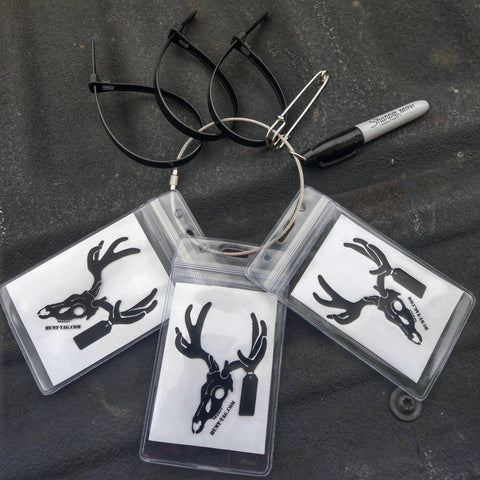
The Hunt-Tag system takes a different path. Our waterproof components are designed to be fully submersible. We assume the worst-case scenario: you'll drop this in a creek or hunt through a three-day storm. When you open it, your tags stay dry and legible.
This matters more than people realize. A tag that has absorbed moisture might still be there, but if the ink has run, a warden might question its validity.
Some competitors use rigid plastic cases. These offer protection but are bulky and lack organization. You end up with a protected box that holds everything in a jumbled pile.
Paper Tag and E-Tag Support in One System
Electronic tagging is growing, but the transition is messy. States have different apps and backup rules. If you hunt across multiple states, you might encounter four different systems in one year.
Most competitors leave you on your own; they handle paper or they handle digital, but rarely both.
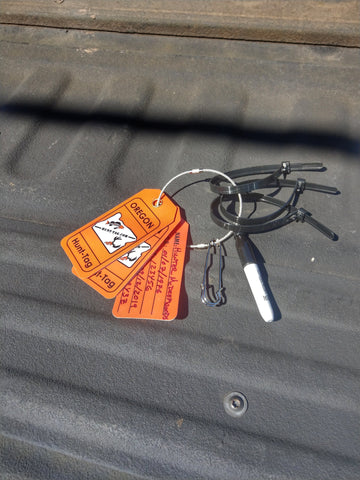
For paper tags, you need waterproof storage and attachment tools. The Hunt-Tag Paper Tag Kit is built for this.
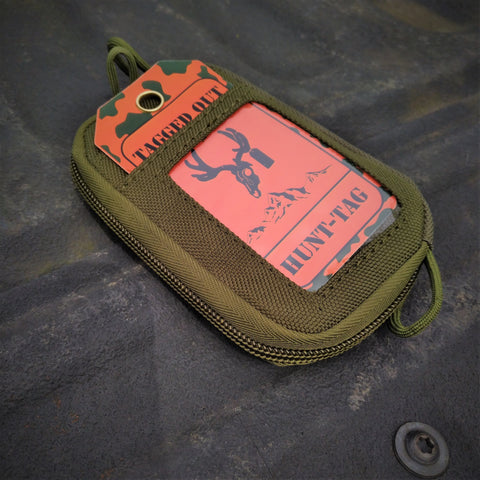
For e-tags, you need your phone charged and functional. The Tech Pouch gives you an organized place for your phone and power bank.
Some states, like Oregon, require both digital validation and physical documentation on the carcass. The Oregon Hunt-Tag System E-Tag Kit is built for these specific rules. Most competitors offer a generic pouch and leave you to figure out the state-specific details on your own.
What Competitors Get Right (And Where They Stop)
We want to be fair. There are competitor products that do certain things well:
-
Basic organization pouches: These work well if you only hunt in dry conditions and never encounter rain.
-
Rigid waterproof cases: These protect documents well from water, though they don't help you organize licenses or tags.
-
DIY solutions: A quality dry bag and some zip ties can cover the basics if you don't mind troubleshooting failures yourself.
The limitation is that they solve one problem at a time. The organization pouch fails in the rain. The waterproof case has no organization. Hunt-Tag was designed as a complete system because field problems are interconnected.
Game Warden Inspections and Your System
A game warden isn't trying to ruin your day; they just have to verify compliance. The smoother you make that process, the faster you get back to the hunt.
Disorganized paperwork signals that you might not have things together, which invites closer scrutiny. Damaged or illegible tags work against you.
The Hunt-Tag Wallet keeps everything accessible. When a warden asks, you can present your docs in seconds instead of digging through a messy pack.
Choosing a System Based on Your Hunt
Not every hunter needs the same setup, and that’s a good thing. The right system should fit how you hunt, where you hunt, and the kind of weather or terrain you usually deal with.
-
If you hunt mostly in dry conditions with simple tag rules, a basic organization pouch may be enough. Just keep in mind that conditions can change fast, and a little extra protection never hurts.
-
If you hunt in rain, snow, or wet country, waterproof protection matters a lot more. This is where cheaper products often fall short, especially when paper tags need to stay readable.
-
If you hunt across multiple states or use hybrid e-tag systems, you need a setup that keeps things simple rather than adding more confusion.
-
And if you want one system that’s ready to go without piecing together gear from different places, Hunt-Tag kit options are built to help you start organized from day one.
-
The best system is the one you’ll use every time. When your tags, tools, and backups are all in one place, there’s less to forget and fewer things that can go wrong.
See Why Hunt-Tag Stands Apart from Other Tagging Systems
The goal isn't to buy the fanciest gear. The goal is to stop worrying about tagging. When your system works, you don't notice it. You harvest your animal, reach into your pack, and finish the job without drama.
Hunt-Tag was built by hunters who saw other systems fail. We use waterproofing because paper gets ruined. We use organization because fumbling in the dark is miserable.
If you want to see the full lineup, check out the Hunt-Tag collections page. You can also reach out through the contact page if you have questions about your specific state. Don't wait until the middle of a hunt to find out your system doesn't work.
Common Questions About Tagging Systems
Can I use a regular dry bag instead of a tagging system?
You can, but dry bags don't have internal organization. Your tags and permits end up in a jumbled mess.
A dedicated system like Hunt-Tag keeps documents separated so you can find what you need without dumping the whole bag.
What happens if my phone dies and I need to show an e-tag?
State rules vary, but many require a physical backup or confirmation number. Keeping your phone in a Tech Pouch with a backup battery is the best way to stay legal.
Do I need included attachment tools?
You can buy zip ties separately, but remembering to pack them and keep them accessible is the challenge. Integrated tools remove one more failure point from your list.
Why are state-specific kits better than generic ones?
Rules in Oregon aren't the same as rules in Montana. A generic pouch doesn't account for the specific information you're required to display on a carcass.
State-specific kits ensure you meet the exact legal requirements for where you hunt.